Edge And Parapet
Coping joints crack, base flashing splits where it meets the wall, and termination bars lose their caulk after a summer of daily expansion. Water runs behind the flashing and shows up inside along the wall.

We find and fix leaks on flat, metal, and industrial roofs across Deer Valley, from split seams and packed drains to loose curb flashing and backed-out screws.
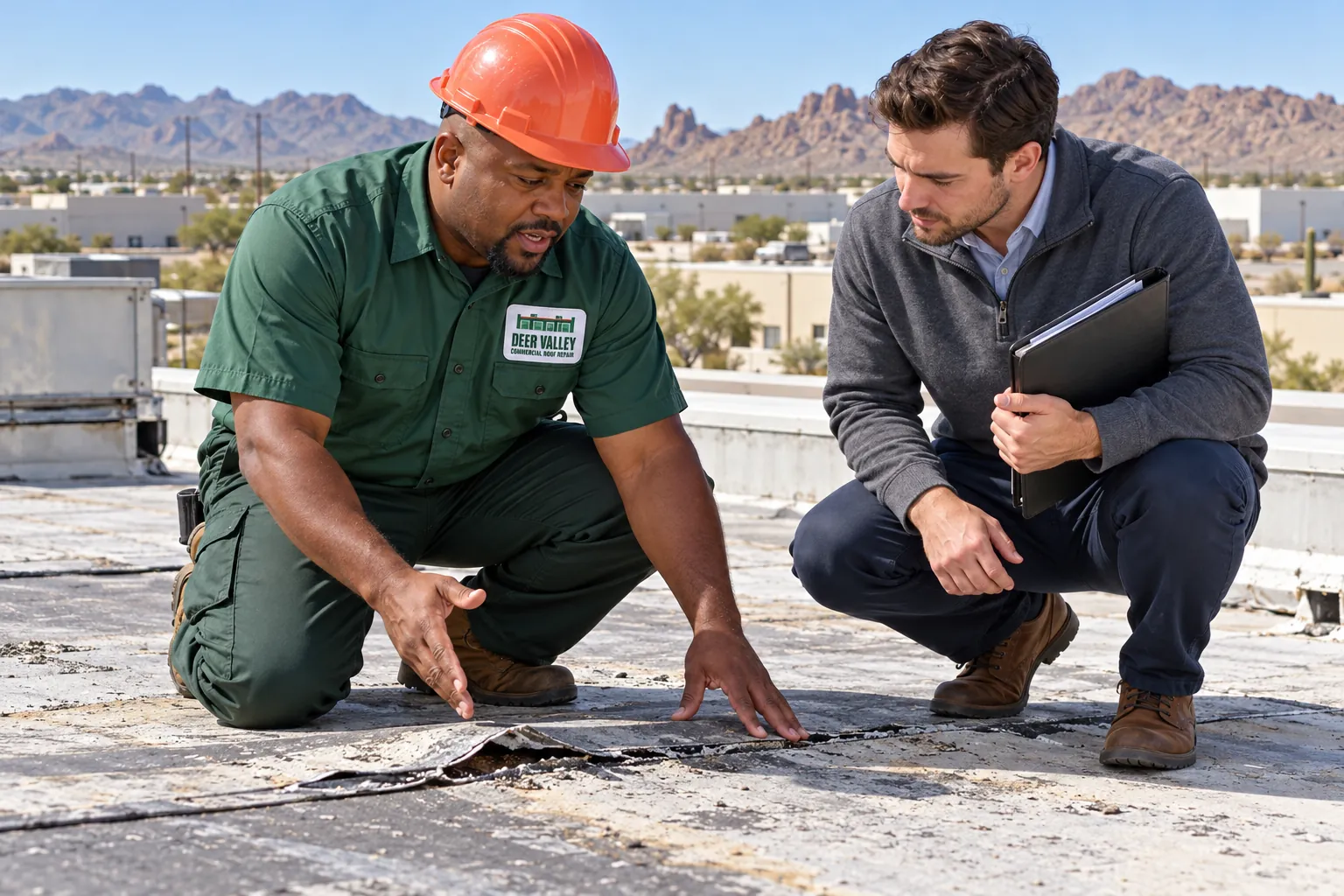
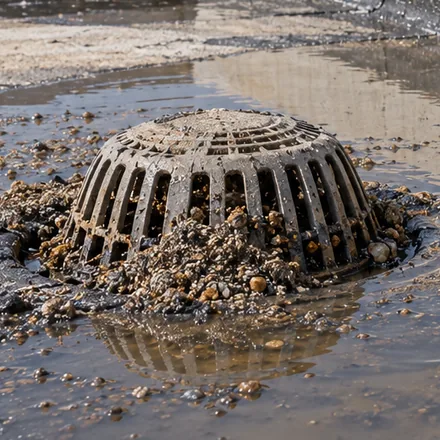
Most commercial roof leaks in Deer Valley start at a detail, rarely in the open field. Each zone of the roof fails in its own way, so commercial roof repair starts with the zone.
Coping joints crack, base flashing splits where it meets the wall, and termination bars lose their caulk after a summer of daily expansion. Water runs behind the flashing and shows up inside along the wall.
Laps open after years of heat cycling, and old patches lift at their edges. A probe run along each seam finds the gaps that a walk-over misses, especially near rooftop units where foot traffic is heaviest.
Blown dust, gravel, and debris pack strainers and scupper boxes, and water backs up against seams that were never built to sit underwater. Cracked clamping rings at drain bowls let it into the deck.
Curbs under rooftop units vibrate their flashing loose. Pipe boots crack, and pitch pans dry out until the sealant pulls away from the pipe, leaving an open ring around the penetration.
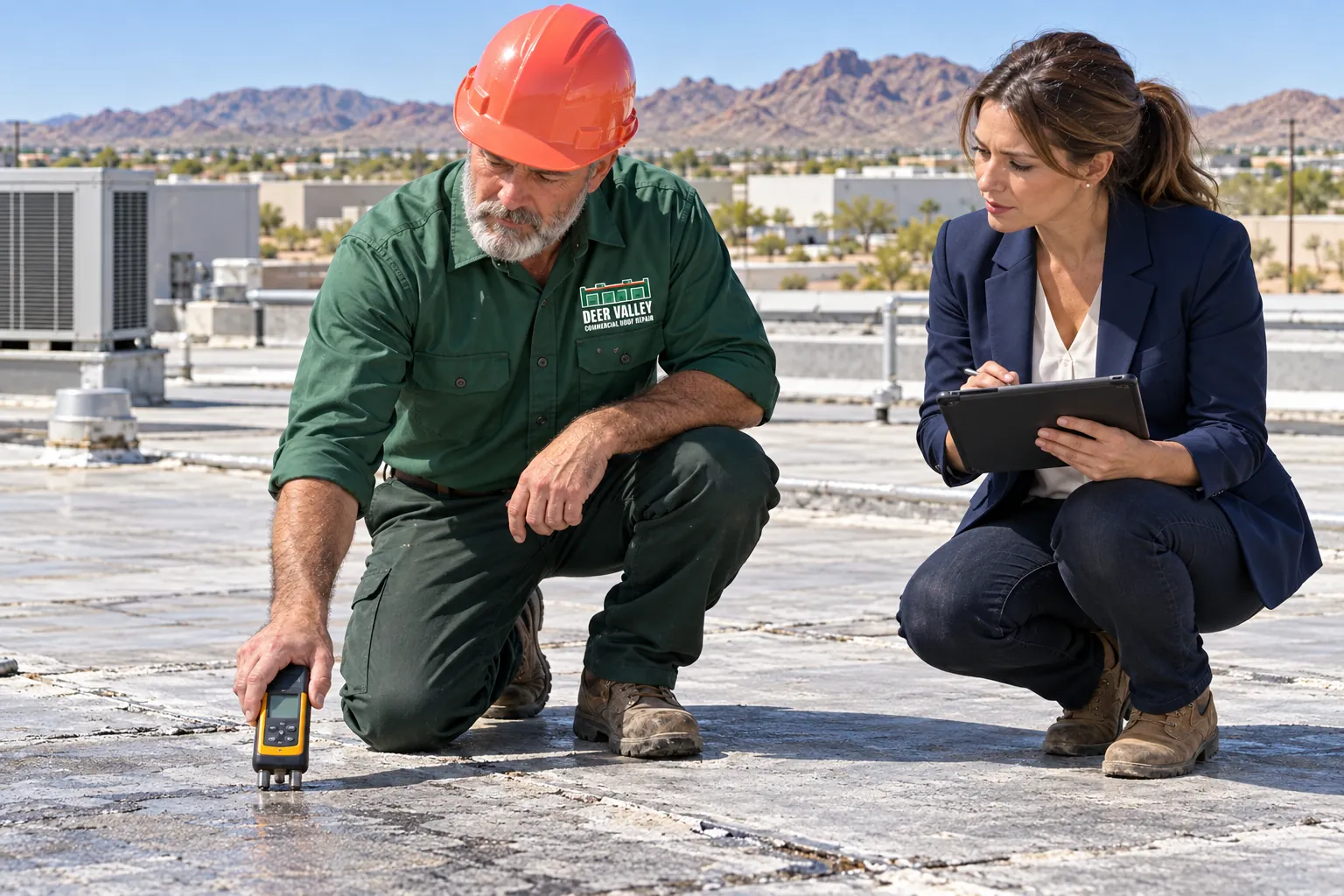
Wet insulation under the membrane feels soft underfoot and leaves ponding rings. A core cut or moisture meter shows how far the water spread, which decides whether a patch will hold.
The answer depends on how much of the roof is wet, the deck condition, and the roof's age. We check all three before recommending either.
Every commercial roof repair follows the same order, from the first walk to the photos of the finished detail.
A roofer walks the whole roof, from the wet corner out to every edge. Seams, laps, fasteners, curbs, drains, and parapet flashing get checked, and a moisture meter reads the insulation near any ceiling stain.
Water rarely drips straight down. We start uphill of the stain and check each curb, drain, and lap along the slope until the entry point shows itself.
If water is coming in now, tape, a sealed patch, or a cleared drain slows it down. These stopgaps buy time and come off when the permanent repair goes in.
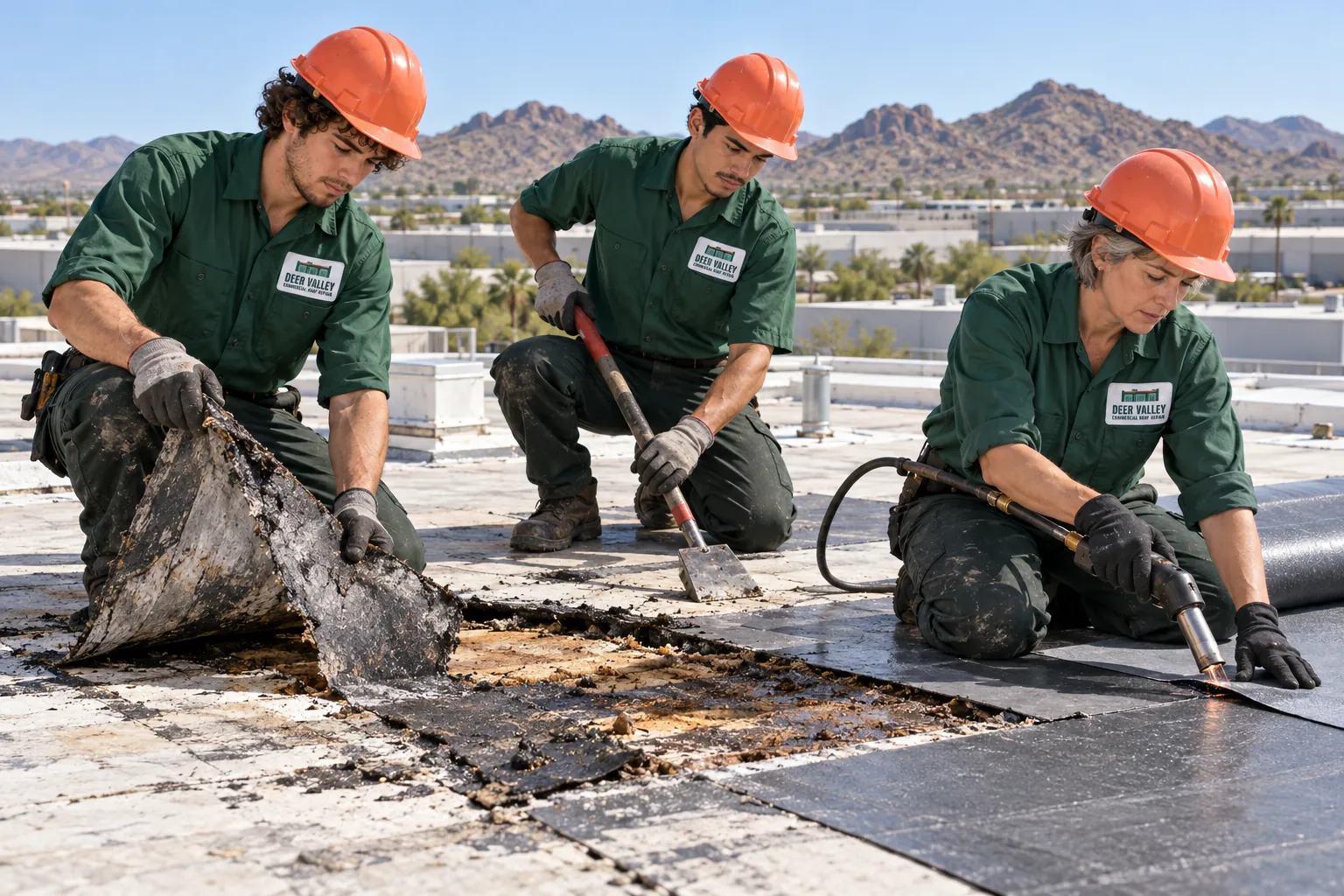
Wet insulation gets cut out and replaced, seams get welded or re-adhered with matching material, and flashing is rebuilt at the curb, pipe, or parapet that let water in.
Finished repairs get a controlled water test where practical and dated photos of each detail, so you can see exactly what changed on your roof.
Call us with the building location and where the water shows up inside. A roofer can talk through temporary steps that keep the damage from spreading.
Call UsFour repair services cover the roofs on Deer Valley warehouses, hangars, shops, and retail buildings. The numbered pins show the details each repair fixes.
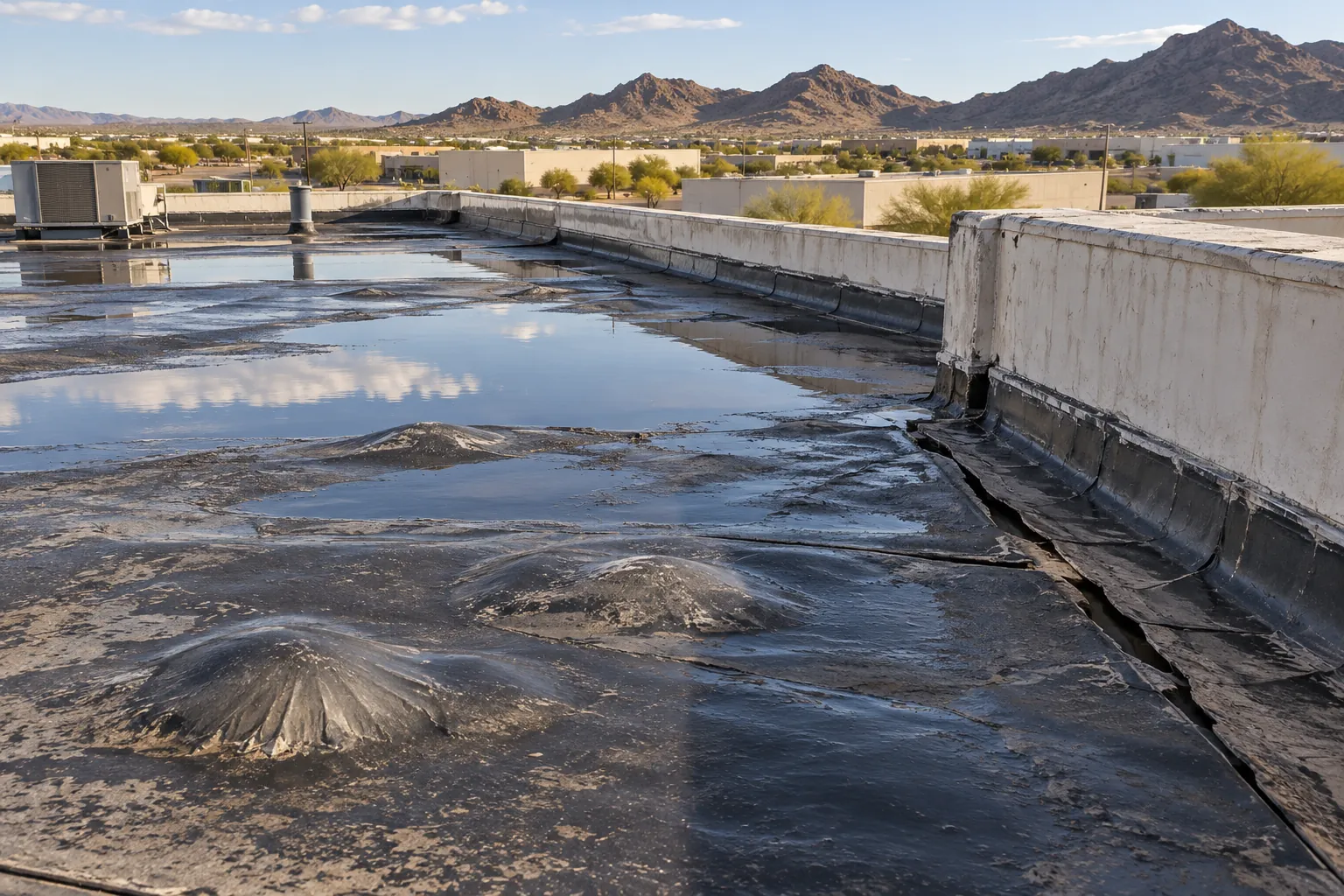
Lap seams, drains, curb flashing, and parapet joints on TPO, built-up, and modified bitumen roofs. Most flat roof leaks start at one of these details, and each gets fixed with material that matches the sheet.
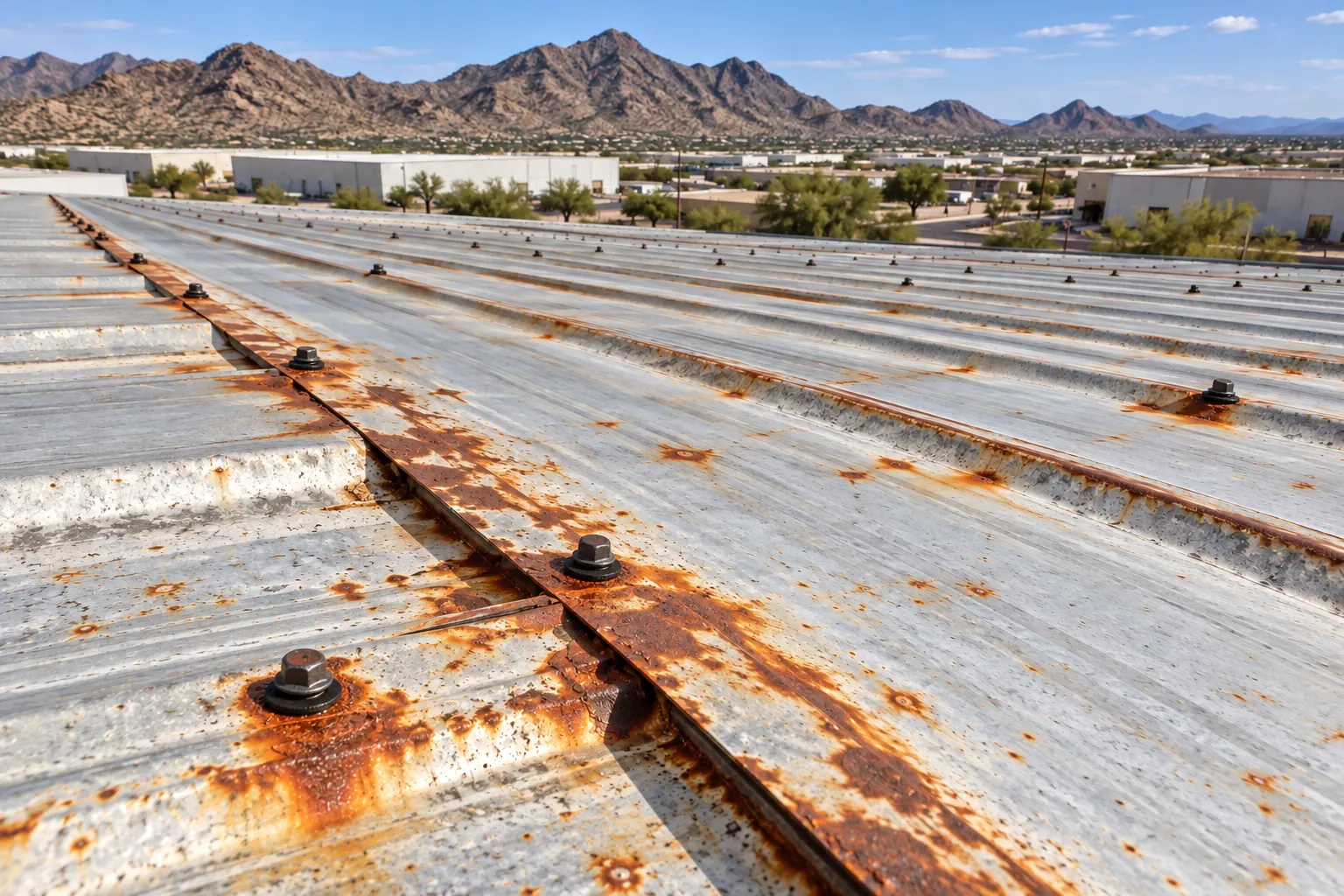
Backed-out screws, dried lap sealant, rust bloom, and cracked skylight panels on steel shop and hangar roofs. Repairs replace the worn parts and keep the good panels in place.
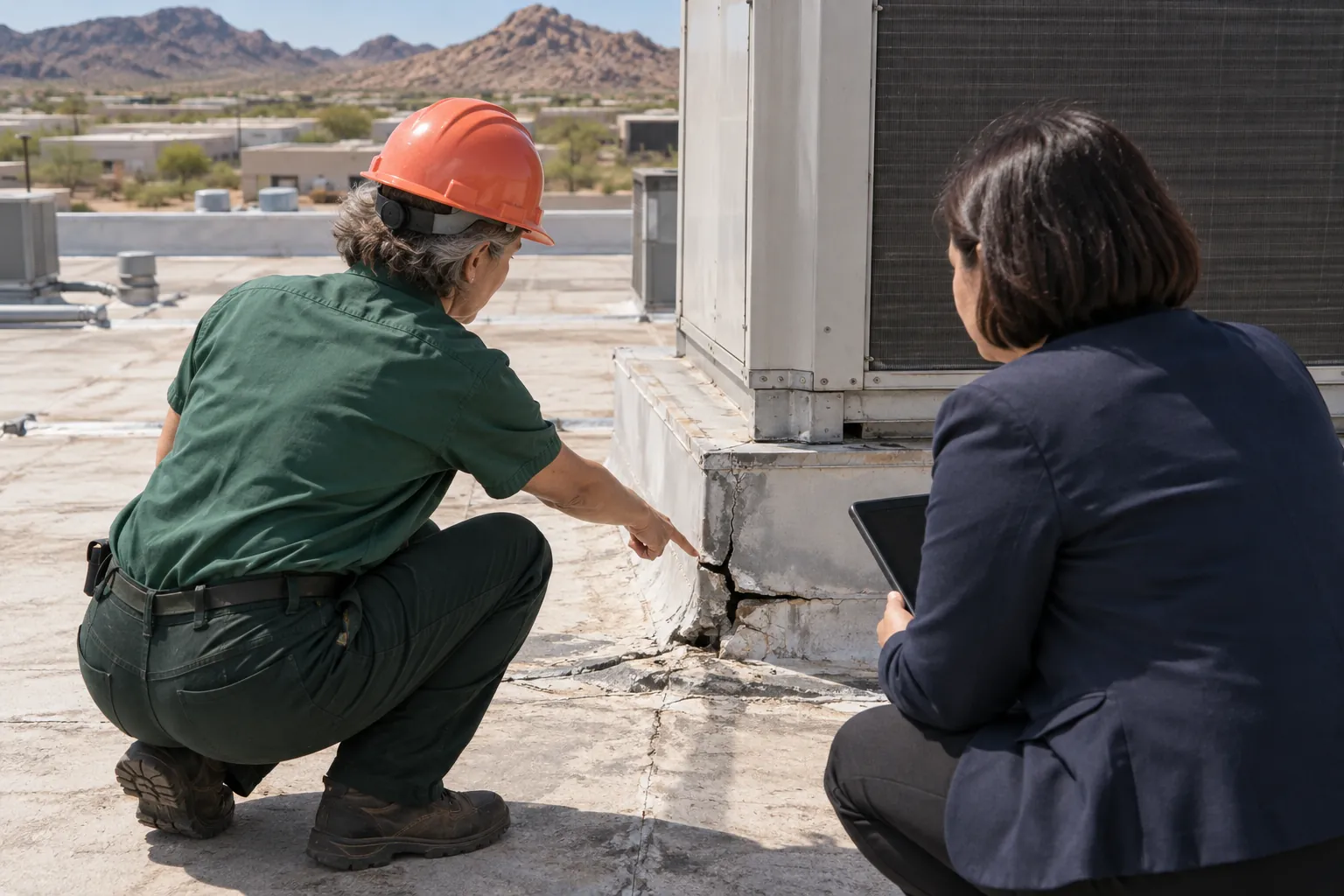
Tracing water from the stain inside back to the failed detail on the roof, stopping it short-term if needed, then rebuilding that detail once the roof is dry.
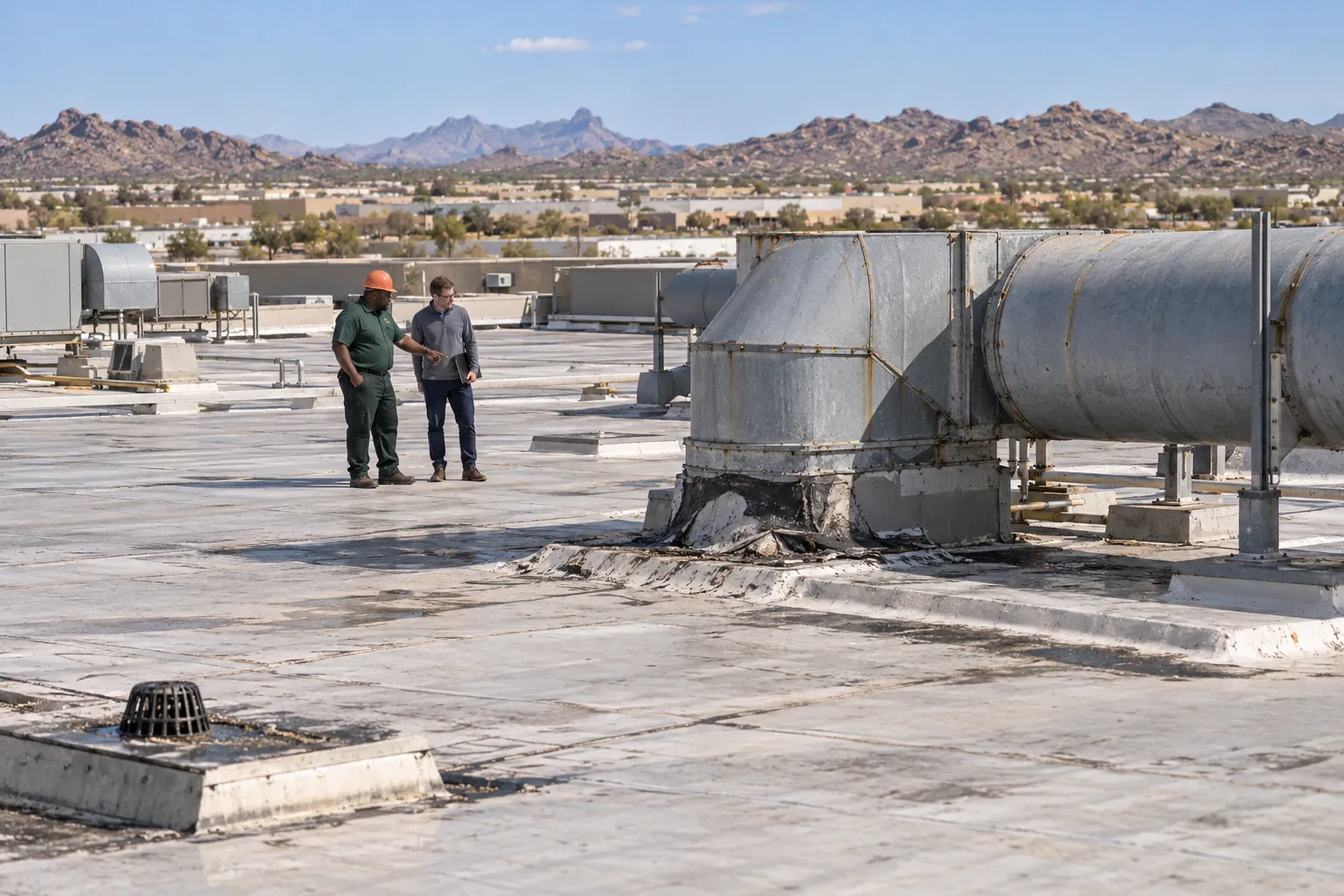
Plant and warehouse roofs with ducts, exhaust stacks, and walkway pads. Work is planned around lockouts, running fans, and shift schedules so production keeps going below.
A repair made at the right time keeps a working roof working. Here is what that means for the buildings we see most.
Sealing a split seam early keeps water out of the insulation, and dry insulation is what lets a patch bond. Once the board soaks through, the repair area grows.
Spot and section repairs happen while trucks keep loading, tenants stay open, and aircraft keep moving in and out of the hangar.
Replacing screws, resealing laps, and rebuilding flashing keeps the panels and membrane that still have years left, instead of tearing off the whole roof.
Photos of every repaired detail make the next inspection faster, help with insurance questions after a storm, and show which seams have already been worked on.
Our service area runs along I-17 from North Mountain to New River. Each area below has its own roof story.
Older retail and office buildings near Metrocenter, where a repair often starts by counting the patch layers already on the roof.
Retail and office roofs around Desert Ridge that drain through interior roof drains above finished ceilings.
Newer roofs in a growing village, repaired with matching sheet and dated photos so warranty terms stay clear.
County parcels where the line between a seam repair and a reroof application decides the paperwork.
Storefront and office roofs repaired around tenants, with work hours set before anyone climbs the ladder.
Spread-out parcels where the ladder, hoist, or lift plan and one full material load come first.
Heat works the roof every day. The NWS Phoenix office lists about 111 days a year at 100°F or more, so membrane and metal expand and shrink constantly. Sealant dries out, flashing pulls away from walls and curbs, and caulk cracks at termination bars. Those are the first details we check.
Yes, when the leak sits at one detail and the insulation around it is dry. A split seam, a cracked pipe boot, or loose curb flashing can be repaired on its own. We core or meter the area first, because wet insulation under the patch would keep the leak coming back.
Water enters at a seam or flashing, then runs along the deck flutes or the top of the insulation until it finds a joint to drop through. That path can cross several bays on a large warehouse, so tracing starts on the roof, uphill of the stain.
TPO and other single-ply membranes, built-up and modified bitumen roofs, and metal panel roofs on shops, hangars, and warehouses. Industrial roofs with ducts, stacks, and walkway pads are part of the work too. Each system gets repair material that matches what is already on the roof.
Take photos of the torn membrane, lifted edge metal, and every new ceiling stain, then call your insurer. Temporary fixes that stop more water are fine to make. Keep receipts for that work, and schedule the permanent repair once the roof dries.
Twice a year suits most buildings here: once in spring before the monsoon and once in fall after it. Add a visit after strong wind or hail. Drains, old patches, and seams beside rooftop units are where small problems show first.
Tell us where the water shows up and what kind of roof you have. We will set up a free inspection and walk you through the repair.
Leave a name and number, or call (623) 310-0171 now.